10 High Demand Jobs and Industries in Germany for Non-EU Citizens


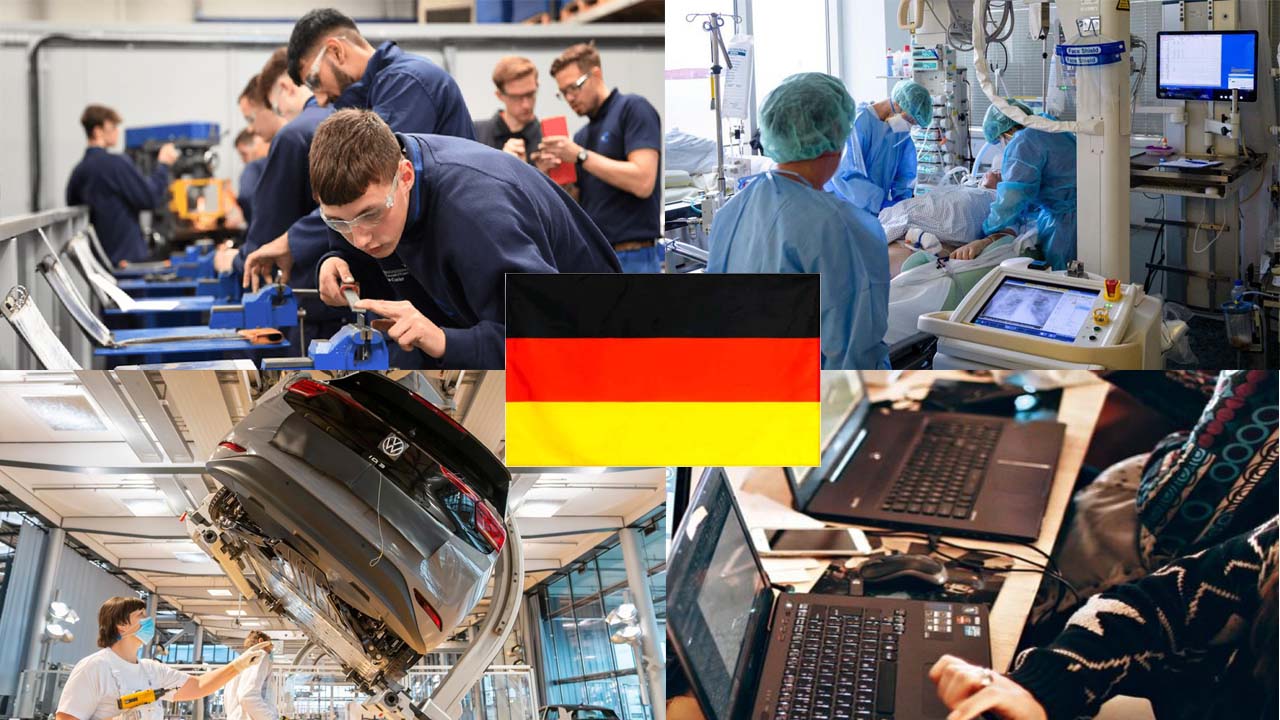
Are you curious about which jobs and industries in Germany have the highest demand? The German labor market is currently racing against a demographic crisis and a severe shortage of skilled workers. A report by the Federal Employment Agency (BA) in May 2025 identified 163 official occupational fields as “bottleneck occupations,” meaning the number of vacancies far exceeds the number of job seekers.
This is a golden opportunity for you, as a non-EU citizen, to build an international career while enjoying a high standard of living in the European Union’s largest economy. To ensure your migration strategy is successful, here is an analysis of the ten sectors most in need of foreign talent.

Germany’s industrial structure is highly diversified, ranging from advanced traditional manufacturing to crucial healthcare services. The German federal government regularly updates the “shortage occupations” list to ensure that work visas are prioritized for foreign experts. Below is an in-depth analysis of the ten industries projected to offer the greatest opportunities for non-EU talent throughout 2025 and beyond.
A surge in the population over the age of 65 has made Germany’s healthcare sector the largest area of opportunity. The BA places nurses, geriatric care workers, and general practitioners at the top of the shortage list. Under the Skilled Worker Visa scheme, hospitals often offer relocation packages that include degree recognition processing and basic German language courses.
Salary: Gross annual salaries start at €38,000 for nurses and above €60,000 for entry-level doctors.
Bitkom reported 149,000 vacant IT positions in 2025. Giants like SAP and Berlin-based scale-ups are competing for Java developers, data analysts, and AI experts. The EU Blue Card offers a fast track for candidates with a minimum salary of €45,300 (or €41,041 for shortage fields).
Benefit: Many firms cover relocation costs and offer English-speaking environments while sponsoring German language lessons.
The German Economic Institute (IW) reported a shortage of 163,600 STEM specialists in May 2025. Automotive 4.0, robotics, and smart factories require international engineers to maintain industrial competitiveness.
Salary: Entry-level engineers in automotive plants can earn €55,000, while senior engineers in the energy sector can exceed €75,000 per year.
Read Also: 10 UK Economic Sectors with the Most Opportunities for Foreign Workers
From welders and electricians to carpenters, the construction sector cannot keep up with the demand for new infrastructure and green building renovations. For vocational graduates, the Skilled Worker (Fachkräfte) visa pathway allows you to work while reaching the required A2–B1 German language levels.
Salary: Certified welders can start at €18 per hour plus overtime and performance bonuses.
Half of Germany’s goods move by road, but licensed C/CE truck drivers are increasingly hard to find. Logistics companies offer the Dual Ausbildung (paid apprenticeship) program, allowing you to earn a German certificate while working.
Salary: Net pay for long-haul drivers can reach €2,500–€3,000 per month plus daily allowances.
The energy transition has sparked a boom in solar and wind power vacancies. Green jobs reached 372,500 in 2025, but half of these positions lack skilled applicants.
Incentives: Solar technicians and wind turbine engineers can enjoy salaries between €50,000–€70,000 per year, often with hybrid work schedules.
Pharmaceutical and AI firms are aggressively hiring international researchers. The Section 18d residence permit specifically facilitates doctoral candidates and scientists.
Salary: Research funding is usually combined with a contract worth €48,000–€60,000 (TV-L E13–E14 equivalent).
The shortage of kindergarten teachers (Erzieher) is a growing national issue. States like Brandenburg and Saxony-Anhalt offer Anerkennungsjahr (recognition year) programs for foreign pedagogy graduates.
Salary: Starting at €2,800 gross per month with 30 days of vacation and continuous professional training.
Hotels and restaurants are in dire need of international chefs and service managers. The Section 19c visa (which allows working based on professional experience rather than formal qualifications) offers a significant opportunity for culinary experts.
Read Also: Top 10 Career Opportunities in South Korea Highly Occupied by Foreign Workers
Despite the shift to electrification, the German automotive industry still needs robot operators, mechatronics technicians, and production data analysts. Companies like BMW, Mercedes-Benz, and Volkswagen actively recruit non-EU talent via the Fast-Track Visa for skilled workers.
Salary: Experienced mechatronics technicians earn around €45,000, while digital manufacturing specialists can reach €70,000 per year.
Career opportunities in Germany in 2025 are wide open for non-EU citizens ready to meet qualification and language standards. Update your international CV, complete your language certifications, and become part of the transformation of Europe’s largest economy.
Transfez App can help you transfer money Germany more quickly and efficiently. Jack Finance can also help your business in making transactions abroad. For those of you who want to send money to relatives who are abroad because they are studying, working, or traveling, Transfez will be ready to help. This app is available on Android as well as iOS.