Top 10 Career Opportunities in South Korea Highly Occupied by Foreign Workers


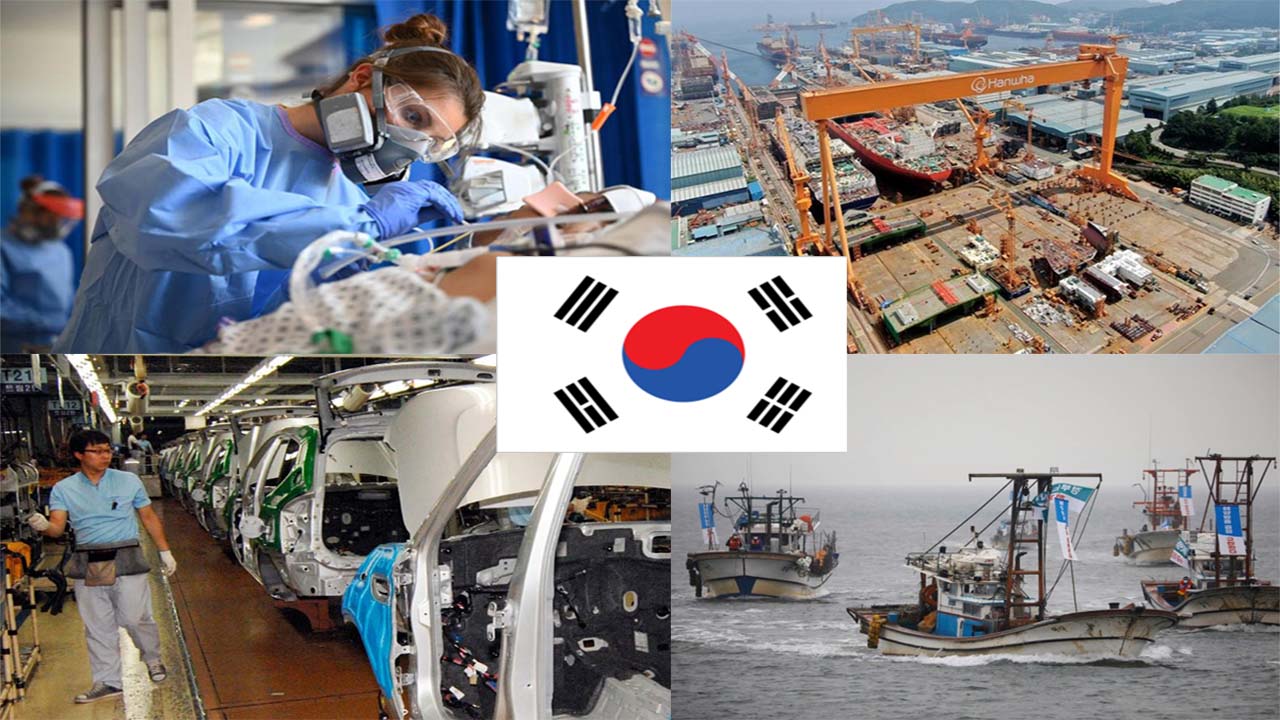
Interested in career opportunities in South Korea? The country has emerged as one of the world’s most influential economic powerhouses, thanks to aggressive technological innovation and global cultural expansion. However, behind this progress, the “Land of the Morning Calm” faces a serious demographic challenge: a record-low birth rate and a rapidly aging population.
This condition has created a significant labor gap across various sectors, from heavy-duty manufacturing to the digital economy. In response, the South Korean government is actively reforming visa policies and opening doors wider for international talent—both skilled professionals and technical workers to support national economic sustainability. For those with specific expertise or a strong interest in East Asian careers, South Korea offers highly competitive opportunities with attractive salary standards.

The growth of South Korean industries currently relies heavily on their ability to attract global talent to maintain production and innovation rhythms. Various visa schemes, such as the E-7 (Professional) and E-9 (Non-professional), are specifically designed to fill crucial positions lacking local candidates. Here is an in-depth look at the ten economic sectors currently absorbing the largest number of foreign workers.
Demand for AI data center chips has caused government support to surge. In April 2025, Seoul increased its semiconductor industry support package to 33 trillion won, complementing projects like the Yongin SK hynix cluster.
Pathway: STEM candidates often choose the D-10 (Job Seeker) to E-7 transition. Focus on R&D projects and industrial certifications to strengthen your application.
High vessel orders have led shipyards in Geoje, Ulsan, and Yeongam to ramp up recruitment. The government is accelerating the issuance of E-7 and E-9 visas for shipyards.
Note: Skilled workers on E-9 visas can transition to the E-7-4 (Skilled Worker Points System) for long-term residency after meeting skill requirements.
Korea’s battery supply chain continues to invest in next-generation technologies (ASSB, LFP, sodium-ion). With major manufacturers targeting LFP production by 2026, roles in quality, process engineering, HSE, and automation are in high demand.
Strategy: Experience in 4680 line commissioning or global project management will put you in a strong position with manufacturers and suppliers.
Read Also: Top 10 Industries in Canada Offering the Greatest Opportunities for Foreign Workers
ICT exports rose throughout 2025, driven by AI chips and mobile devices. This momentum has spiked the need for talent in data, cloud, AI/ML, and cybersecurity across finance, healthcare, and manufacturing.
Pathway: Utilize high-tech internship programs or the D-10 to E-7 route to enter the digital ecosystem.
South Korea officially became a “super-aged society” in 2024/2025, with over 20% of the population aged 65+. Consequently, demand for rehabilitation and elderly care is rising.
Observation: While clinical licenses for foreigners are strictly regulated, many start in clinical research, digital health management, or support roles.
Demand for foreign language teachers remains stable in public schools and hagwons (private institutes). The E-2 visa is specifically for conversation instructors.
Requirement: Applicants must be citizens of one of the seven recognized English-speaking countries. This is one of the clearest paths for those with an education background.
Korea aims for 18.5 million international tourists in 2025. This recovery drives the need for front-of-house staff, chefs, housekeeping, and MICE (Meetings, Incentives, Conferences, and Exhibitions) sales.
Location: Competition is high in iconic destinations like Seoul, Busan, and Jeju. Highlight your international guest service experience.
As a major retail channel, Korean e-commerce is expanding its fulfillment centers and cold chain networks. Professionals with experience in WMS (Warehouse Management Systems) and delivery SLAs (Service Level Agreements) are highly sought after by 3PL providers and online retailers.
Despite a slight cooling in the sector due to interest rates, infrastructure projects and energy retrofitting still require licensed trades.
Note: Professional roles (estimators, engineers) utilize the E-7 visa, while non-professional workers (electricians, welders) often use the EPS (E-9) system, with the potential to upgrade to E-7-4 status.
Read Also: 10 UK Economic Sectors with the Most Opportunities for Foreign Workers
Local governments recruit seasonal workers for harvests and seafood processing through the Seasonal Worker Program (SWP).
Visa Types: Korea offers the E-8 (Seasonal Work) and E-9 (Manufacturing/Agribusiness) paths. These schemes are structured and transparent, ensuring compliance with minimum wage and safety standards.
Mapping out the right sector and preparing your documents (ECA, language proficiency, and certifications) is essential for a successful career in South Korea. By choosing employers who comply with regulations, you can accelerate your journey from job search to placement.
Transfez App can help you transfer money to South Korea more quickly and efficiently. Jack Finance can also help your business in making transactions abroad. For those of you who want to send money to relatives who are abroad because they are studying, working, or traveling, Transfez will be ready to help. This app is available on Android as well as iOS.