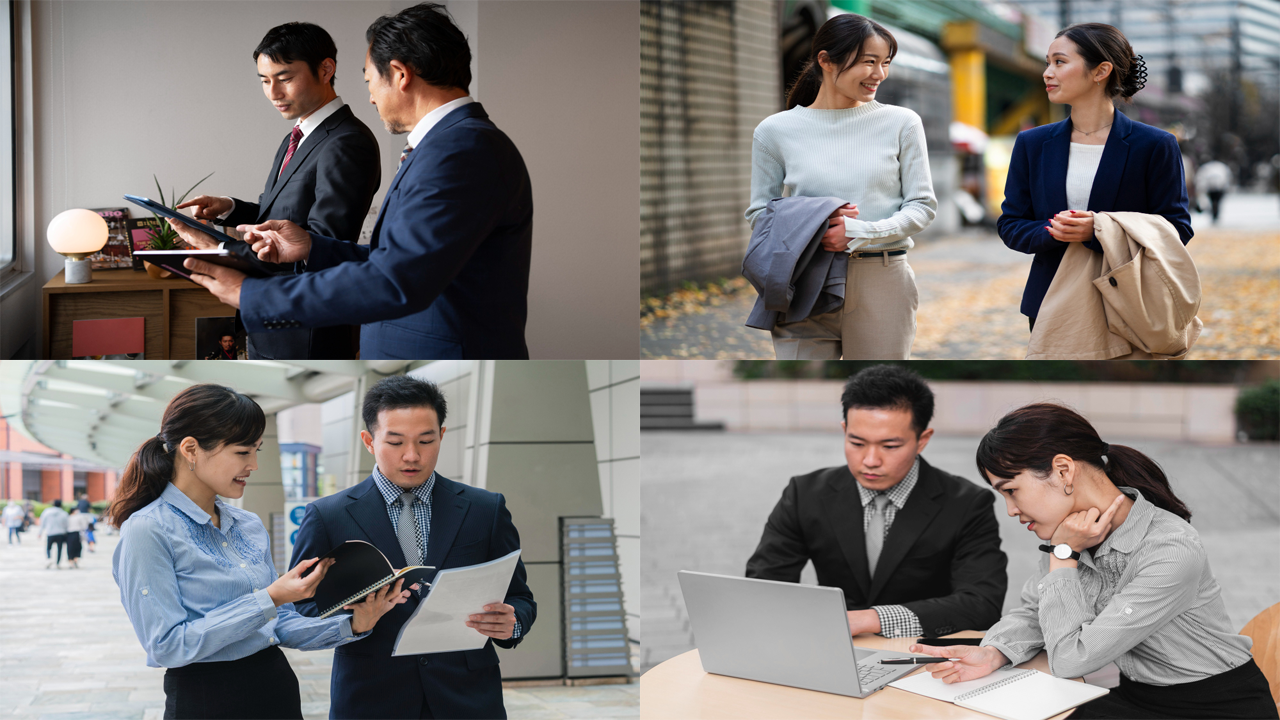
South Korea has transformed from a war-torn agrarian nation into one of the world’s most influential economic powerhouses in record time a phenomenon famously known as the “Miracle on the Han River.”
This success is inseparable from the unique foundation of work ethics and corporate culture in South Korea, where dedication, loyalty, and discipline are not just slogans but the very lifeblood of the workforce. For foreign professionals, the Korean work environment may seem demanding, but it contains a highly organized system of values. Understanding how Confucian principles blend with industrial modernity is key to grasping why South Korean employees work with such extraordinary precision and speed.
The Pillars of Discipline: How Traditional Values Shape High Professionalism

Discipline in South Korea is not merely the result of coercion; it is the fruit of deep-seated social structures. In the corporate world, every action has its own etiquette. Here are the seven key secrets behind the “super-discipline” of South Korean employees.
1. Punctuality as a Commitment, Not Just Politeness
In Korean business, arriving on time is a primary indicator of whether you can be trusted with even the smallest responsibilities. Business guides emphasize that punctuality is crucial; arriving early is often encouraged because Seoul’s traffic is notorious.
The Impact: Discipline becomes a daily standard rather than a special rule for guests. Meetings and deadlines are tied to specific hours, not vague timeframes like “later this afternoon.”
2. Title-Based Language: “Surname + Title” Discipline
South Korean corporate culture uses titles and family names to maintain a safe professional distance. Using a surname followed by a title (e.g., Kim-Busangnim or Director Kim) conveys respect and clarity regarding hierarchy.
The Result: This linguistic discipline forces employees to be more careful with their word choices. Even when rejecting proposals or correcting documents, the formal tone keeps emotions in check and maintains office political harmony.
3. Strict Hierarchy for Clear Accountability
Korean work culture is deeply hierarchical, where status is derived from age, position, and connections. The Cultural Atlas highlights that management can be paternalistic.
The Benefit: When the “who reports to whom” line is crystal clear, discipline arises because errors are easily traced and roles cannot be ignored. In meetings, juniors rarely interrupt superiors, fostering a culture of thorough preparation before speaking.
Read Also: Work Ethics and Corporate Culture in Thailand Are the Secret to Asian Business Success
4. The Art of Nunchi (Reading the Room)
Nunchi is the ability to gauge the atmosphere, understand what others are thinking or feeling, and adjust one’s actions accordingly. It is the ultimate form of “reading the room” based on subtle signals rather than words.
In Practice: Nunchi drives an unwritten discipline. Employees know when to speak up, when to send a written summary instead, and when to avoid sensitive topics. To “save face,” Koreans rarely give a flat “no”; professionals must use nunchi to detect hesitation and respond politely.
5. Maintaining Harmony and “Saving Face”
Explosive negative emotions in public are considered damaging to professional relationships. The Cultural Atlas emphasizes avoiding open anger or public criticism, as it causes a loss of “face” (kibun).
Consequence: Criticism is wrapped as a suggestion for improvement or discussed in private. This keeps the organization appearing “calm” while ensuring work continues through established procedures.
6. The Ppalli-Ppalli (Hurry-Hurry) Mentality
The term ppalli-ppalli describes the fast-paced rhythm of Korean society. In the office, this shifts the work standard toward lightning-fast responses, quick revisions, and rapid decision-making.
Business Edge: This culture makes teams incredibly strong in execution and adaptation. However, it requires a balance with clear working hours to prevent burnout.
Read Also: Navigating Work Ethics and Corporate Culture in Saudi Arabia
7. Business Card and Meeting Etiquette
A business card is treated as a professional identity, not just a piece of paper. The Ritual: Business cards are given and received with both hands, accompanied by a slight bow. One must not tuck it immediately into a back pocket. This routine trains employees to be meticulous about details even before the discussion starts on targets and figures.
The secret to South Korea’s super-disciplined workforce is a network of social and formal rules that reinforce each other. When backed by modern labor regulations, South Korean corporate culture produces a level of execution that is consistent and difficult to replicate without understanding its cultural context.
Download Transfez App
Transfez App can help you transfer money to South Korea more quickly and efficiently. Jack Finance can also help your business in making transactions abroad. For those of you who want to send money to relatives who are abroad because they are studying, working, or traveling, Transfez will be ready to help. This app is available on Android as well as iOS.