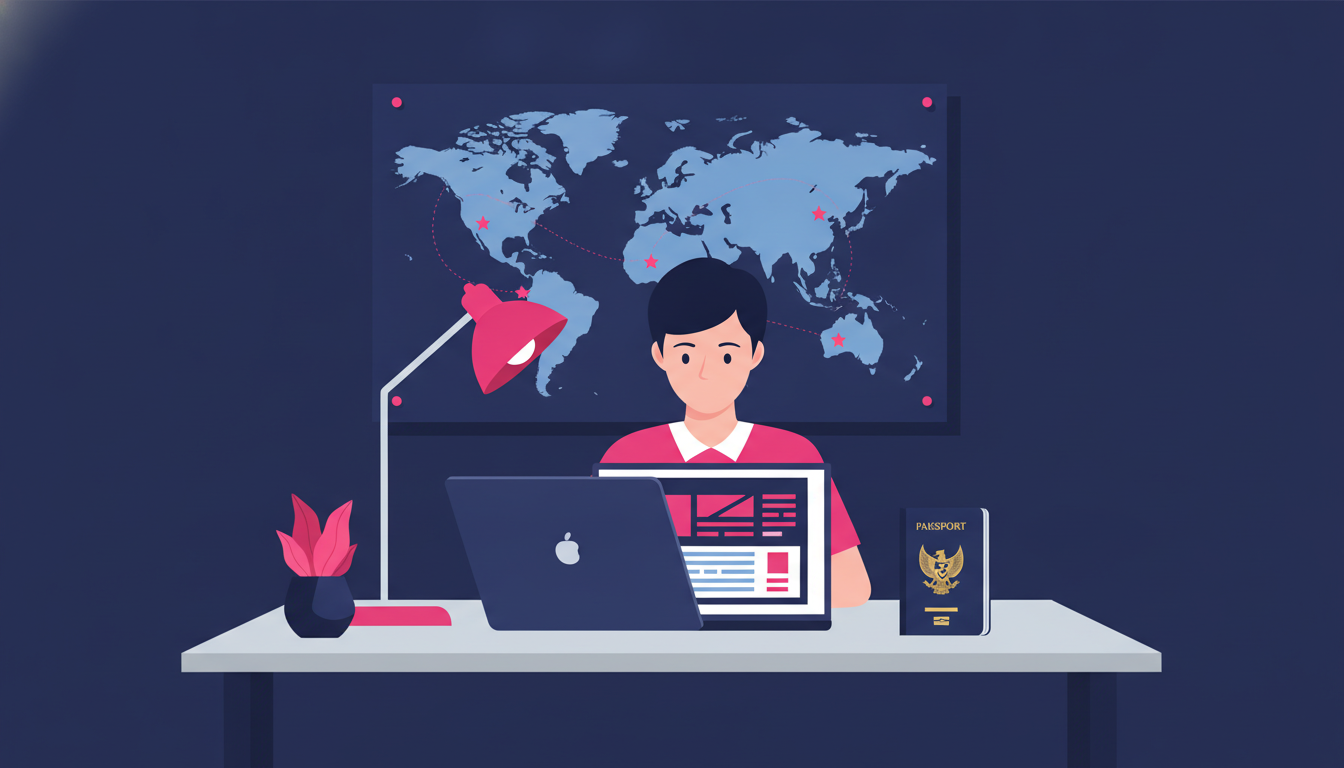
Let’s be honest. At some point, almost every Indonesian has daydreamed about living and working in another country. Maybe it’s the higher salary, the global experience, or simply the thrill of building a new life somewhere completely different. Whatever your reason, that dream is more achievable than you might think.
Share your referral code with friends and family. When they sign up and complete a transaction, you earn points or rewards based on the active program.
*Rewards and mechanics may vary by program period. Terms and conditions apply.
Why Working Abroad Is Worth Considering
Before diving into the how-to, let’s talk about the why. Working overseas isn’t just about earning more money (though that’s a big perk). It’s about building a skill set and perspective that’s genuinely hard to replicate at home.

1. Career Growth and Global Exposure
International work experience makes your resume stand out, both abroad and back home. Employers everywhere respect candidates who have navigated foreign workplaces and multicultural teams.
2. Higher Earning Potential
Many countries offer salaries that are significantly higher than Indonesian averages, even for entry-level roles. This can help you save faster, support your family, or invest in your future.
3. Personal Development
Living abroad forces you to grow. You’ll sharpen your language skills, build resilience, and develop a global network that can open doors for decades to come. You can read more about what that journey feels like in real stories from Indonesians who’ve lived overseas.
Step-by-Step: How to Work Abroad from Indonesia
Ready to make the move? Here’s a practical roadmap to get you from “thinking about it” to actually packing your bags.

1. Choose Your Target Country and Industry
Not all countries are equally accessible for Indonesian workers. Some popular destinations include Japan, South Korea, Australia, Germany, the Netherlands, Singapore, and the Middle East. Each has its own demand for workers in specific sectors.
Ask yourself:
- Which industries are hiring in that country?
- Do you meet the language requirements?
- What’s the cost of living compared to potential earnings?
- Are there existing Indonesian communities there?
Narrowing this down early saves you a lot of wasted energy later.
2. Prepare Your Documents Early
This step trips up a lot of people. Start gathering your documents well before you apply for jobs. Here’s what you’ll typically need:
- A valid paspor (passport) with enough validity remaining. If you don’t have one yet, check out this complete guide on what a passport is and how to get one.
- Certified translations of your academic certificates and transcripts
- A professional CV formatted for international standards
- Reference letters from previous employers
- Police clearance certificate (SKCK)
- Health certificate from an authorized clinic
Start this process at least three to six months before your target departure date. Bureaucracy takes time everywhere, including Indonesia.
3. Research and Apply for the Right Visa
This is the step most people find most confusing. The type of visa you need depends entirely on what kind of work you’ll be doing and which country you’re going to.
Common work visa categories include:
- Skilled worker visas for professionals with specific qualifications
- Working holiday visas for younger workers (usually under 30) in countries like Australia and Japan
- Employer-sponsored visas where a company in the destination country supports your application
- Seasonal or contract worker visas for labor-intensive sectors like agriculture or construction
The visa application process can be lengthy and document-heavy. For a deeper breakdown of the process, this complete visa guide for beginners is a great place to start.
4. Find a Job Before You Leave (When Possible)
Securing a job offer before you move makes everything easier, including your visa application. Here’s where to look:
- LinkedIn: The most powerful tool for professional job hunting internationally
- Indeed, Glassdoor, and country-specific job boards: Each country has its own popular platforms
- BNP2TKI / BP2MI: Indonesia’s official agency for placing workers abroad. Going through official channels protects your rights as a worker.
- Company websites: Apply directly if you have a target employer
- Recruitment agencies: Especially useful for blue-collar or hospitality jobs
Tailor your CV and cover letter to fit the norms of your target country. A German employer expects a very different CV format than an Australian one.
5. Improve the Skills That Matter Most
Two things will significantly improve your chances of landing a job abroad: language skills and recognized certifications.
For language, focus on whatever is spoken in your target country. English proficiency (IELTS or TOEFL) opens doors in most English-speaking countries. Japanese proficiency tests (JLPT) are essential for Japan. German B1 or B2 level is often required for many roles in Germany.
For certifications, look into what credentials are recognized internationally in your field. Engineers, nurses, and tradespeople often need to have their qualifications formally assessed and recognized in the destination country.
6. Understand Your Financial Setup
Once you’re abroad and earning, you’ll likely want to send money back to family in Indonesia. This is something many overseas workers do regularly, and it’s important to find a reliable, cost-effective way to do it.
Understanding how international bank transfers work, including things like what a SWIFT code is, will help you avoid unnecessary confusion when transferring money. Also, know that apps like Transfez make it straightforward to send money from abroad to Indonesia without the usual headache of traditional bank transfers.
Common Mistakes to Avoid When Working Abroad
Learning from others’ mistakes saves you time, money, and stress. Watch out for these common pitfalls.

1. Using Unofficial Recruitment Agents
Illegal or unregistered recruitment agents are a serious problem in Indonesia. Always verify that any agency is registered with BP2MI. If something feels off or they’re asking for large upfront fees, walk away.
2. Skipping Research on Worker Rights
Every country has its own labor laws. Before you sign any contract, understand your rights around working hours, leave entitlements, minimum wage (if applicable to your visa category), and contract termination.
3. Underestimating the Cost of Living
A high salary overseas doesn’t automatically mean you’ll save more. Cities like Tokyo, Amsterdam, or Sydney are expensive. Map out your expected monthly expenses before committing to a move.
4. Neglecting Your Mental Health
Culture shock and loneliness are real. Build a support network before you go. Connect with Indonesian communities (diaspora) in your destination city. Many have active WhatsApp groups, social gatherings, and even mentoring for newcomers.
Bonus: International Scholarships as a Gateway
Not quite ready to jump straight into work? Many Indonesians use international scholarships as a stepping stone. Studying abroad gives you a local credential, language skills, and a professional network in your target country, all of which make it much easier to stay and work afterward. Check out this full guide on international scholarships for Indonesian students if that path interests you.
See Also: How to Transfer Money from Abroad to Indonesia
Perfect for community managers, group admins, content creators, or anyone who wants to help others send money abroad — and get rewarded for it.
- ✓Promote Transfez using your affiliate link or code
- ✓Earn a commission each time a referred user completes a transaction
- ✓Official program — full info page & T&Cs available
*Terms and conditions apply. Rewards are subject to change in accordance with program policy.
Download the Transfez App
The Transfez app helps you send money abroad faster, cheaper, and more efficiently. Jack Finance can also support your company's cross-border transactions. Sending money to family studying, working, or traveling overseas? Transfez has you covered. Available on Android and iOS — download now!