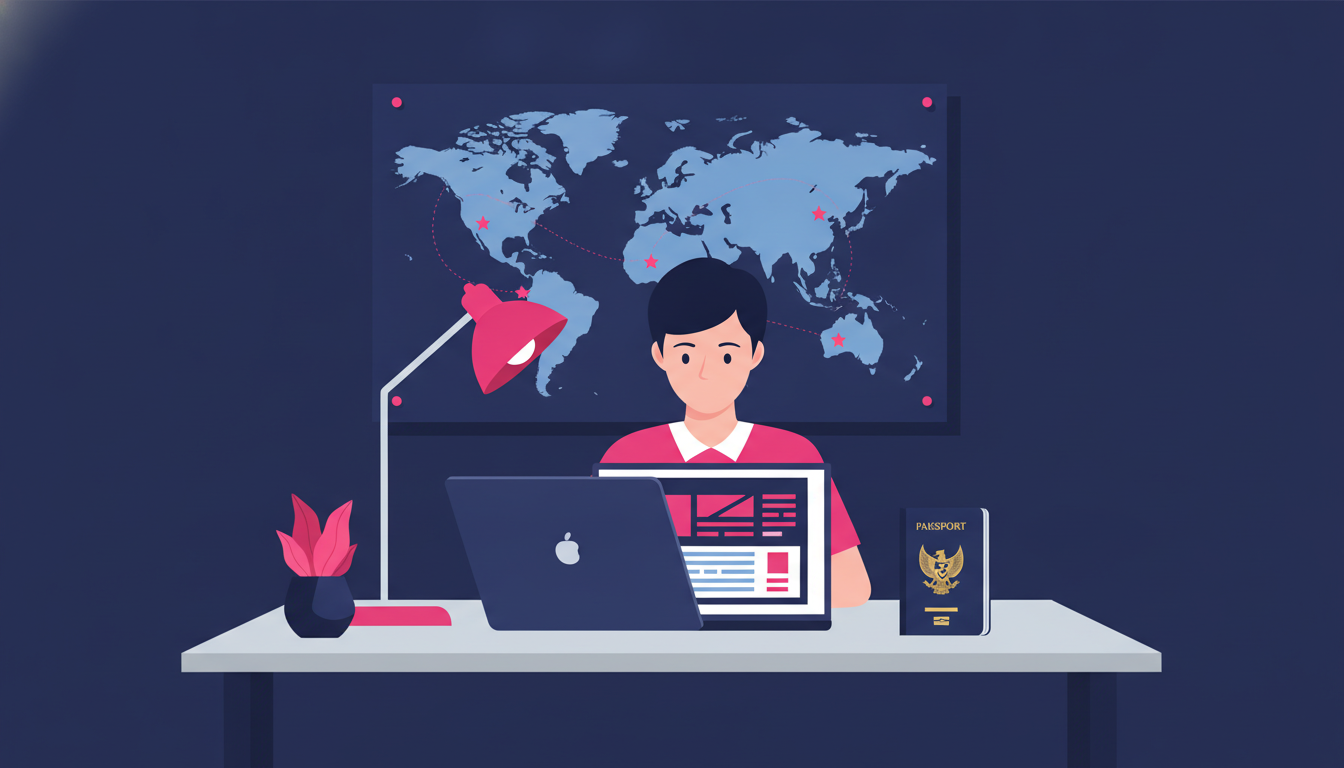
Bagaimana Cara Kerja di Luar Negeri: Panduan Lengkap

How to Work Abroad from Indonesia: A Complete Guide

Let’s be honest. At some point, almost every Indonesian has daydreamed about living and working in another country. Maybe it’s the higher salary, the global experience, or simply the thrill of building a new life somewhere completely different. Whatever your reason, that dream is more achievable than you might think.

The good news? Thousands of Indonesians successfully land jobs abroad every year. The not-so-good news? The process can feel overwhelming if you don’t know where to start. That’s exactly why this guide exists. Whether you’re a fresh graduate or a mid-career professional, here’s everything you need to know about how to work abroad from Indonesia, step by step.

Why Working Abroad Is Worth Considering

Before diving into the how-to, let’s talk about the why. Working overseas isn’t just about earning more money (though that’s a big perk). It’s about building a skill set and perspective that’s genuinely hard to replicate at home.

a young Indonesian professional shaking hands with a foreign employer in a modern office building abroad

1. Career Growth and Global Exposure

International work experience makes your resume stand out, both abroad and back home. Employers everywhere respect candidates who have navigated foreign workplaces and multicultural teams.

2. Higher Earning Potential

Many countries offer salaries that are significantly higher than Indonesian averages, even for entry-level roles. This can help you save faster, support your family, or invest in your future.

3. Personal Development

Living abroad forces you to grow. You’ll sharpen your language skills, build resilience, and develop a global network that can open doors for decades to come. You can read more about what that journey feels like in real stories from Indonesians who’ve lived overseas.

Step-by-Step: How to Work Abroad from Indonesia

Ready to make the move? Here’s a practical roadmap to get you from “thinking about it” to actually packing your bags.

a woman sitting at a desk researching job listings on a laptop with a world map pinned to the wall behind her

1. Choose Your Target Country and Industry

Not all countries are equally accessible for Indonesian workers. Some popular destinations include Japan, South Korea, Australia, Germany, the Netherlands, Singapore, and the Middle East. Each has its own demand for workers in specific sectors.

Ask yourself:

  • Which industries are hiring in that country?
  • Do you meet the language requirements?
  • What’s the cost of living compared to potential earnings?
  • Are there existing Indonesian communities there?

Narrowing this down early saves you a lot of wasted energy later.

2. Prepare Your Documents Early

This step trips up a lot of people. Start gathering your documents well before you apply for jobs. Here’s what you’ll typically need:

  • A valid paspor (passport) with enough validity remaining. If you don’t have one yet, check out this complete guide on what a passport is and how to get one.
  • Certified translations of your academic certificates and transcripts
  • A professional CV formatted for international standards
  • Reference letters from previous employers
  • Police clearance certificate (SKCK)
  • Health certificate from an authorized clinic

Start this process at least three to six months before your target departure date. Bureaucracy takes time everywhere, including Indonesia.

3. Research and Apply for the Right Visa

This is the step most people find most confusing. The type of visa you need depends entirely on what kind of work you’ll be doing and which country you’re going to.

Common work visa categories include:

  • Skilled worker visas for professionals with specific qualifications
  • Working holiday visas for younger workers (usually under 30) in countries like Australia and Japan
  • Employer-sponsored visas where a company in the destination country supports your application
  • Seasonal or contract worker visas for labor-intensive sectors like agriculture or construction

The visa application process can be lengthy and document-heavy. For a deeper breakdown of the process, this complete visa guide for beginners is a great place to start.

4. Find a Job Before You Leave (When Possible)

Securing a job offer before you move makes everything easier, including your visa application. Here’s where to look:

  • LinkedIn: The most powerful tool for professional job hunting internationally
  • Indeed, Glassdoor, and country-specific job boards: Each country has its own popular platforms
  • BNP2TKI / BP2MI: Indonesia’s official agency for placing workers abroad. Going through official channels protects your rights as a worker.
  • Company websites: Apply directly if you have a target employer
  • Recruitment agencies: Especially useful for blue-collar or hospitality jobs

Tailor your CV and cover letter to fit the norms of your target country. A German employer expects a very different CV format than an Australian one.

5. Improve the Skills That Matter Most

Two things will significantly improve your chances of landing a job abroad: language skills and recognized certifications.

For language, focus on whatever is spoken in your target country. English proficiency (IELTS or TOEFL) opens doors in most English-speaking countries. Japanese proficiency tests (JLPT) are essential for Japan. German B1 or B2 level is often required for many roles in Germany.

For certifications, look into what credentials are recognized internationally in your field. Engineers, nurses, and tradespeople often need to have their qualifications formally assessed and recognized in the destination country.

6. Understand Your Financial Setup

Once you’re abroad and earning, you’ll likely want to send money back to family in Indonesia. This is something many overseas workers do regularly, and it’s important to find a reliable, cost-effective way to do it.

Understanding how international bank transfers work, including things like what a SWIFT code is, will help you avoid unnecessary confusion when transferring money. Also, know that apps like Transfez make it straightforward to send money from abroad to Indonesia without the usual headache of traditional bank transfers.

Common Mistakes to Avoid When Working Abroad

Learning from others’ mistakes saves you time, money, and stress. Watch out for these common pitfalls.

a person carefully reviewing official-looking documents at a table with a checklist beside them

1. Using Unofficial Recruitment Agents

Illegal or unregistered recruitment agents are a serious problem in Indonesia. Always verify that any agency is registered with BP2MI. If something feels off or they’re asking for large upfront fees, walk away.

2. Skipping Research on Worker Rights

Every country has its own labor laws. Before you sign any contract, understand your rights around working hours, leave entitlements, minimum wage (if applicable to your visa category), and contract termination.

3. Underestimating the Cost of Living

A high salary overseas doesn’t automatically mean you’ll save more. Cities like Tokyo, Amsterdam, or Sydney are expensive. Map out your expected monthly expenses before committing to a move.

4. Neglecting Your Mental Health

Culture shock and loneliness are real. Build a support network before you go. Connect with Indonesian communities (diaspora) in your destination city. Many have active WhatsApp groups, social gatherings, and even mentoring for newcomers.

Bonus: International Scholarships as a Gateway

Not quite ready to jump straight into work? Many Indonesians use international scholarships as a stepping stone. Studying abroad gives you a local credential, language skills, and a professional network in your target country, all of which make it much easier to stay and work afterward. Check out this full guide on international scholarships for Indonesian students if that path interests you.

See Also: How to Transfer Money from Abroad to Indonesia

Working abroad from Indonesia is absolutely within your reach. It takes planning, persistence, and a willingness to step outside your comfort zone, but so does anything worth doing. Start with one step today, whether that’s renewing your passport, brushing up on a language, or simply researching which country fits your goals best. The world is hiring, and there’s a place in it for you.

Download the Transfez App

The Transfez app helps you send money abroad faster, cheaper, and more efficiently. Jack Finance can also support your company's cross-border transactions. Sending money to family studying, working, or traveling overseas? Transfez has you covered. Available on Android and iOS — download now!


Bagaimana Cara Kerja di Luar Negeri: Panduan Lengkap

How to Work Abroad from Indonesia: A Complete Guide

Let’s be real, the idea of working abroad sounds exciting until you actually sit down and try to figure out where to start. Visa requirements, job hunting in a foreign language, sending money back home… it can feel overwhelming fast. But here’s the thing: thousands of Indonesians make this leap every single year, and most of them figured it out step by step, just like you’re about to do. If you’re curious about why so many Indonesians choose to work overseas, you’ll find the reasons are pretty compelling, better salaries, global experience, and a chance to grow in ways that feel impossible at home.

This guide is your starting point. Whether you’re dreaming of the corporate towers of Kuala Lumpur, the bustling tech scene in Singapore, or the structured work culture of Japan, we’ll walk you through everything you need to know about how to work abroad from Indonesia, practically, honestly, and without the fluff.

Step One: Choose the Right Destination Country

Not all destinations are created equal. The “best” country to work in really depends on your skill set, language ability, budget, and long-term goals. Before you start applying anywhere, do your homework on a few key factors.

a young Indonesian professional sitting at a cafe table with a world map spread open, looking thoughtful while holding a pen

1. Match Your Skills to Market Demand

Different countries are hungry for different types of workers. Malaysia and Singapore have strong demand for engineers, IT professionals, and hospitality workers. Japan actively recruits for manufacturing, caregiving, and food service roles through its Specified Skilled Worker program. The Middle East remains a top destination for construction, healthcare, and domestic work. Research the job market before committing to a destination, don’t just go where your friend went.

2. Consider Language Requirements

English proficiency opens doors in Singapore, Australia, and parts of Europe. If you’re eyeing Japan or South Korea, investing in language study early is non-negotiable. Working in Japan comes with unique cultural rewards, but getting there requires genuine preparation, including passing Japanese language proficiency tests for many visa pathways.

3. Look at the Cost of Living vs. Earning Potential

A higher salary doesn’t always mean more savings. Cities like Singapore pay well but cost a lot. Kuala Lumpur offers a strong balance of earnings and affordable living, which is one reason it attracts so many Indonesian workers. Run the actual numbers before you get starry-eyed about a big salary figure.

Step Two: Get Your Documents and Qualifications in Order

This is where a lot of people get stuck, and it’s also where being prepared early gives you a massive advantage. Working abroad legally always starts with the right paperwork.

a neatly organized desk with a passport, printed documents, and a laptop open to an official government website

1. Understand the Visa and Work Permit Process

Every country has its own rules. Some require your employer to sponsor your work visa before you even arrive. Others have skilled worker visa programs you can apply for independently. Research the specific work permit or visa category that matches your job type, don’t assume a tourist visa can be converted later (in most cases, it legally can’t).

2. Get Your Indonesian Documents Verified

You’ll typically need:

  • A valid Indonesian passport (at least 12–18 months validity remaining)
  • Your ijazah (diploma/degree certificate), ideally with an apostille or notarized translation
  • A clean criminal record certificate (SKCK) from the Indonesian National Police
  • Your work experience letters, translated into English or the destination country’s language

Start gathering these early. Government-issued documents can take weeks to process in Indonesia.

3. Register with BP2MI if You’re Going Through Official Channels

BP2MI (Badan Pelindungan Pekerja Migran Indonesia) is the Indonesian government body that protects migrant workers. If you’re going through a licensed recruitment agency (Perusahaan Penempatan Pekerja Migran Indonesia / P3MI), make sure they’re officially registered. This protects your rights if things go wrong abroad.

Step Three: Find and Land the Job

Okay, the exciting part. Landing a job overseas is a mix of smart positioning, persistence, and knowing where to look.

a person in a professional outfit having a video call job interview on a laptop, looking confident and smiling

1. Build an International-Standard CV

Your Indonesian resume format may not cut it abroad. Research the CV or resume conventions for your target country. In most Western and Southeast Asian markets, a clean one-to-two-page CV with quantifiable achievements performs best. Drop the photo and personal details (age, religion, marital status) that are common in Indonesian CVs, many countries find these irrelevant or even inappropriate.

2. Use the Right Job Platforms

Go where employers in your target country actually post jobs:

  • LinkedIn, essential for professional and corporate roles globally
  • JobStreet, strong for Malaysia and Singapore
  • Indeed, widely used in Australia, the UK, and the US
  • Hello Work, Japan’s official public employment service
  • Company career pages directly, often overlooked but highly effective

3. Network Before You Need To

The Indonesian diaspora in most major work destinations is active and supportive. Join Facebook groups, LinkedIn communities, and WhatsApp networks for Indonesians in your target country. Many job opportunities, especially in Malaysia and Singapore, travel through these informal networks before they’re ever publicly posted.

Step Four: Prepare Financially for the Transition

Moving abroad costs money upfront, even if you have a job lined up. Many first-timers underestimate this phase, and it creates real stress in the first few months.

1. Build a Pre-Departure Emergency Fund

Aim to have at least three months of living expenses saved before you leave. This covers you during the gap between starting work and receiving your first full paycheck, plus any unexpected costs during the settling-in period.

2. Plan How You’ll Manage Two Currencies

Once you’re earning abroad, you’ll be juggling income in a foreign currency while your family and obligations back home are in Rupiah. This is something worth thinking through carefully, understanding how to manage your finances across two currencies can save you a lot of headaches and lost money over time.

3. Think About Saving and Investing Early

Working abroad is a financial opportunity, but only if you’re intentional about it. Many Indonesian workers abroad focus purely on remittances home, without building any personal savings or investments. Exploring saving and investment strategies while working overseas early in your stint abroad can set you up for long-term financial health, not just short-term income.

Step Five: Set Up Smart Remittances Back Home

Most Indonesians working abroad send a portion of their earnings home regularly, whether to support family, pay for a child’s education, or build savings in Indonesia. Doing this efficiently matters.

1. Use a Reliable International Transfer Service

Traditional bank transfers can be slow and costly. Many Indonesian workers abroad use digital remittance services for faster, more convenient transfers. Sending money to family in Indonesia from abroad is much smoother when you have a trusted, app-based service that lets you do it from your phone without visiting a bank branch.

2. Set a Regular Transfer Schedule

Rather than sending money home impulsively, build a routine. A fixed monthly transfer amount keeps your family’s budget predictable and helps you resist the temptation to overspend before sending.

See Also: Financial Management Tips for the Indonesian Diaspora in Malaysia

Working abroad from Indonesia isn’t just a dream, it’s a very achievable plan when you approach it with the right information and a bit of patience. Start with one step at a time: pick your destination, get your documents sorted, build your international CV, and make a financial plan before you board that plane. The Indonesians who thrive overseas aren’t necessarily the most talented, they’re the ones who prepared the smartest. You’ve got this.

Download the Transfez App

The Transfez app helps you send money abroad faster, cheaper, and more efficiently. Jack Finance can also support your company's cross-border transactions. Sending money to family studying, working, or traveling overseas? Transfez has you covered. Available on Android and iOS — download now!